Top-Level Domain Filter
The Top-Level Domain Filter controls which websites students can visit based on their top-level domain (TLD), the extension at the end of a web address, such as .com, .edu, or .io. Each top-level domain is either allowed or blocked, and blocking a top-level domain blocks every website that ends in it. Allowed top-level domains do not override your other filters, which continue to apply as usual.
Use Top-Level Domain Filters to block entire groups of websites at once, such as foreign or unfamiliar domains, without listing each website individually. For example, blocking .io restricts many browser game websites.
Note
Add a specific URL to a Custom Category or an Exception List to allow or block it without changing the state of its top-level domain.
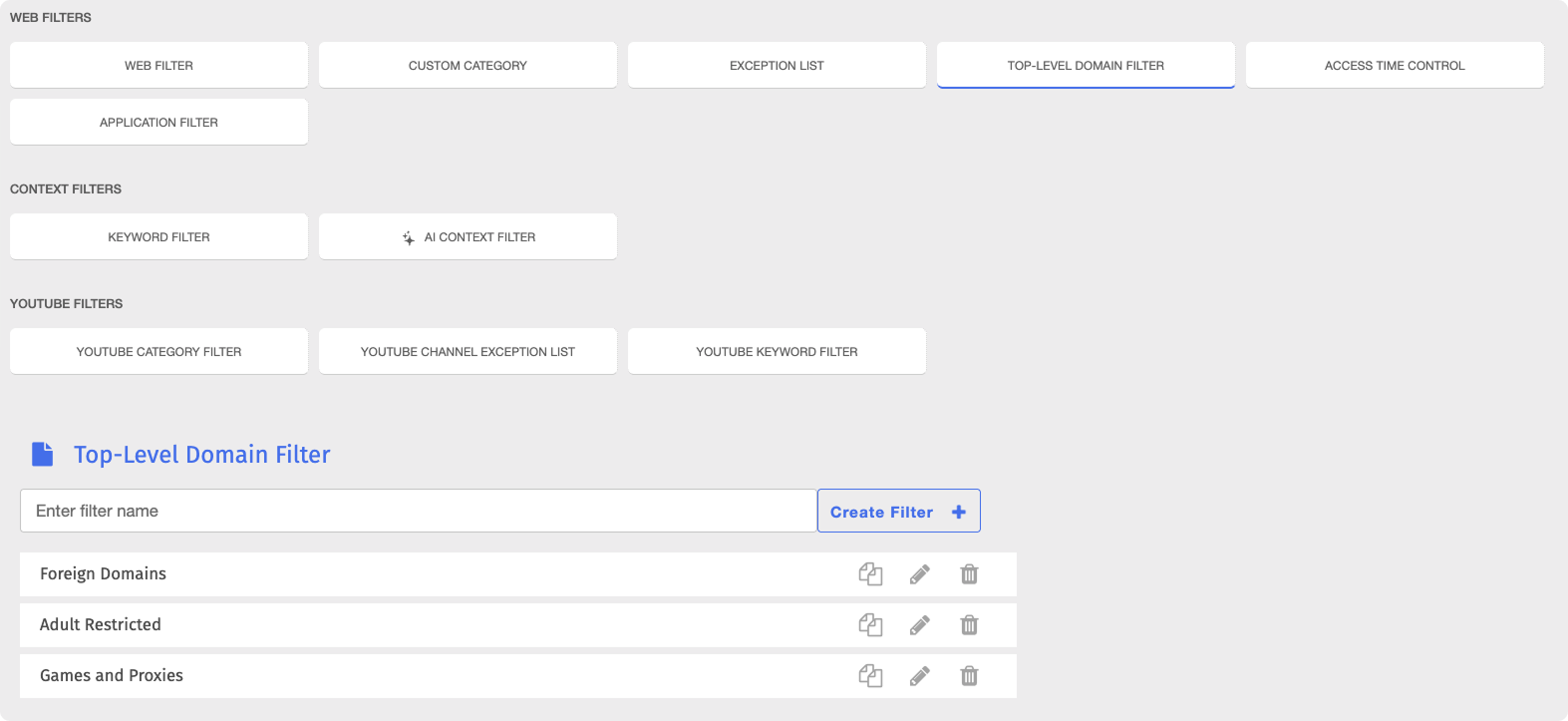
To access the Top-Level Domain Filter page, click Content Filtering from the Main Menu, then click Filters from its sub-menu. On the Filters page, click Top-Level Domain Filter listed under Web Filters.
Important
After making any changes to your content filtering or policies, click the  button in the Action Bar at the top of the page to apply the changes.
To set up a Top-Level Domain Filter, create the filter, then block the top-level domains you want to restrict.
Type a name for the filter in the Enter filter name text box, then click the
 button. The new filter appears on the Top-Level Domain Filter page.

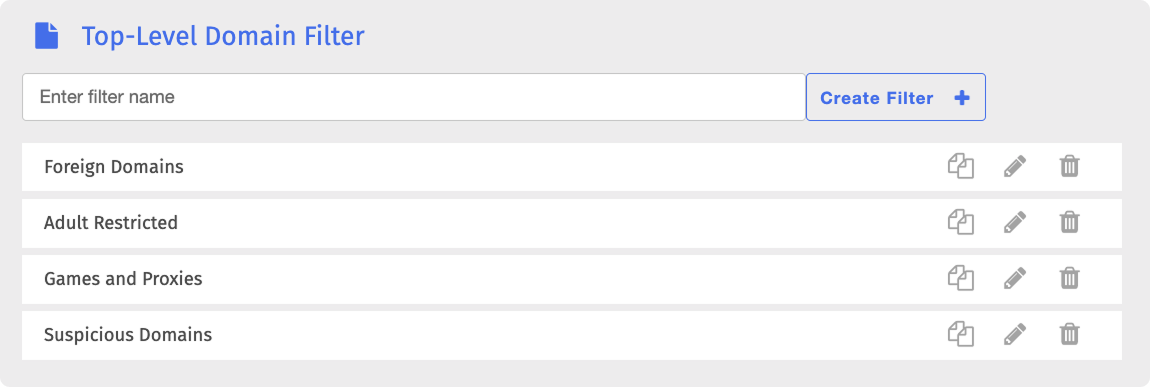
Click the
 button in the same row as the new filter. The Edit Top-Level Domain Filter page opens.
Important
All top-level domains are in the Allowed section by default upon creating a Top-Level Domain Filter. A new Top-Level Domain Filter blocks nothing until you block at least one top-level domain.
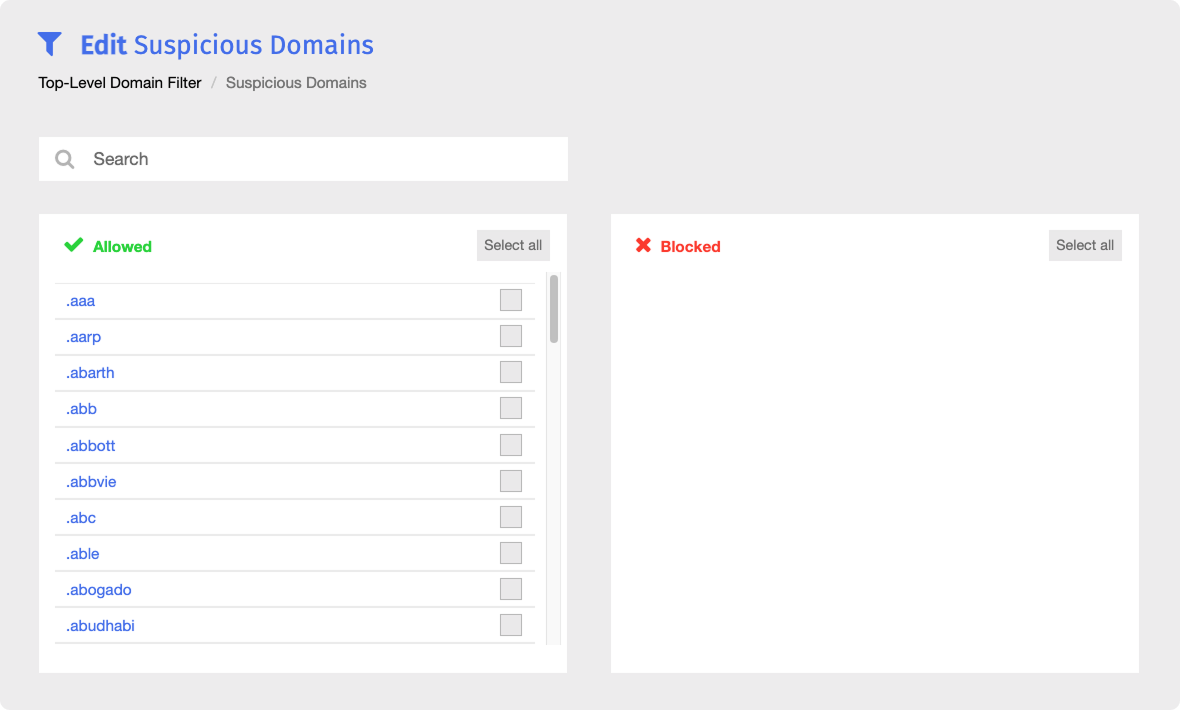
In the Allowed section, select the checkbox next to each top-level domain you want to block, or click Select all to select every top-level domain shown.
Tip
Type in the Search box to narrow the list. Select all then selects only the matching top-level domains.
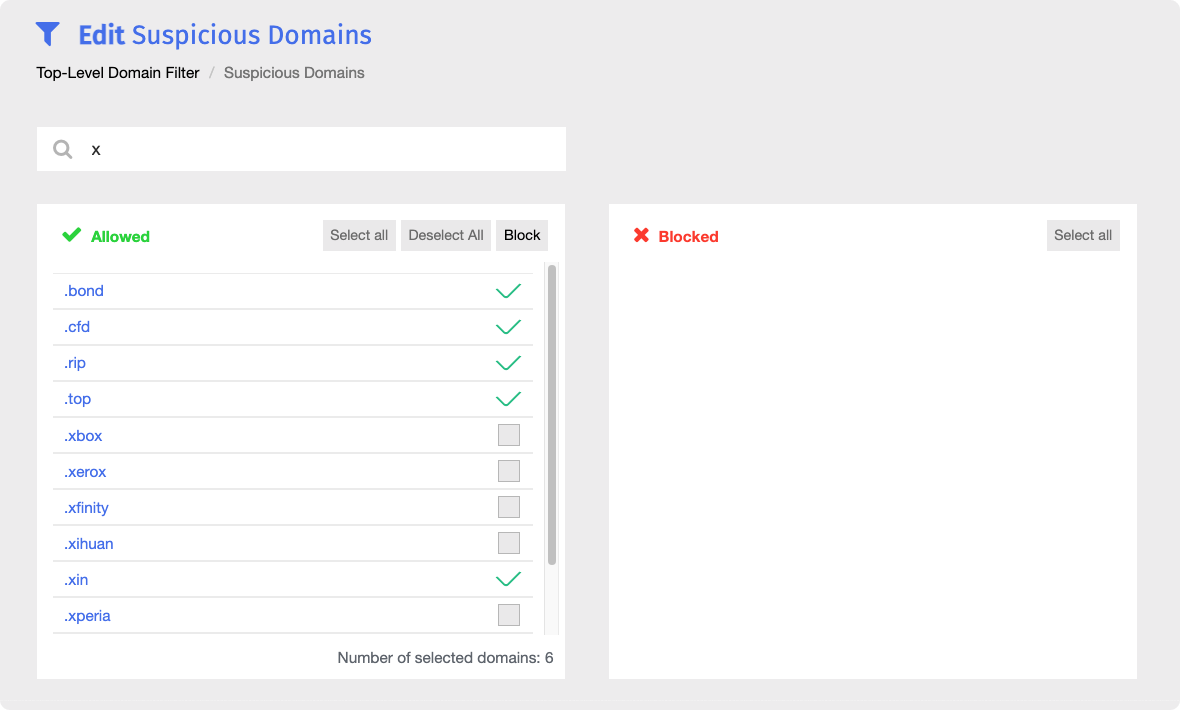
Click the Block button, which appears once you select at least one top-level domain. The selected top-level domains move to the Blocked section.
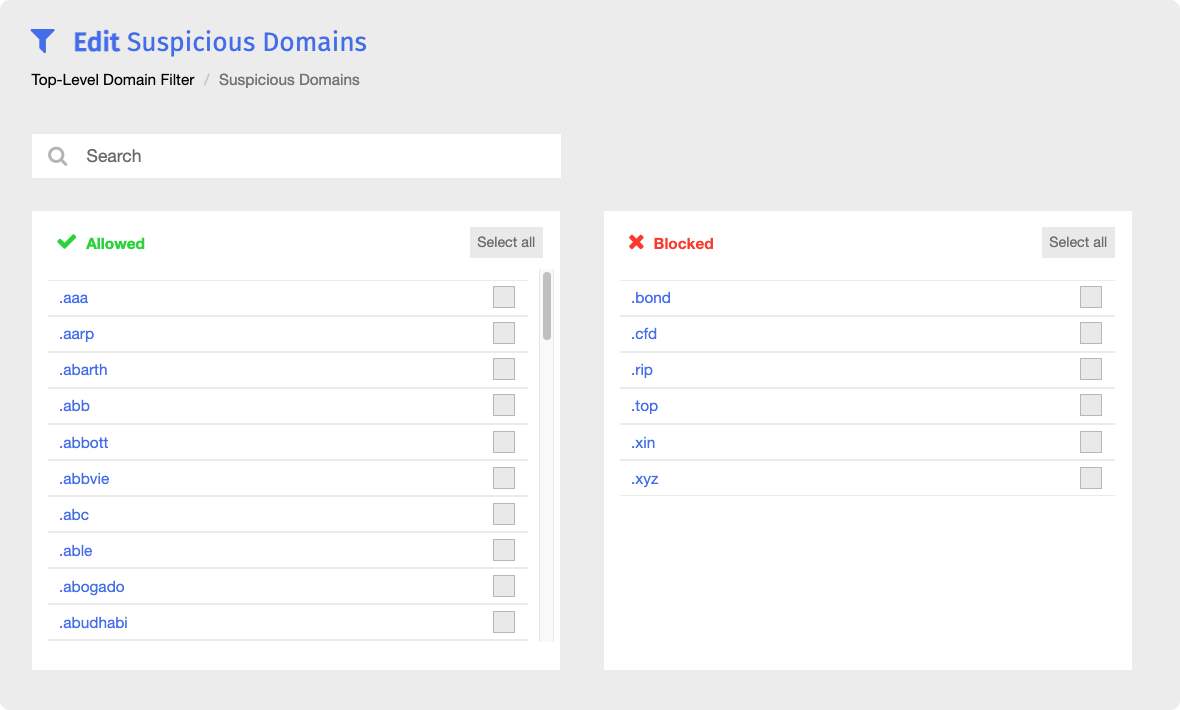
You can manage your Top-Level Domain Filters by blocking or allowing their top-level domains, renaming, duplicating, or deleting them. All of these actions can be performed directly on the Top-Level Domain Filter page.
On the Top-Level Domain Filter page, locate the filter and click the
button. The Edit Top-Level Domain Filter page opens.Do one of the following:
Select top-level domains in the Allowed section and click Block. The selected top-level domains move to the Blocked section.
Select top-level domains in the Blocked section and click Allow. The selected top-level domains move to the Allowed section.
On the Top-Level Domain Filter page, locate the filter to rename and click its name. The filter name opens in an editable text box.

Make your changes, then click the Save button.
On the Top-Level Domain Filter page, locate the filter to duplicate and click the
 button. The Duplicate Filter window opens.
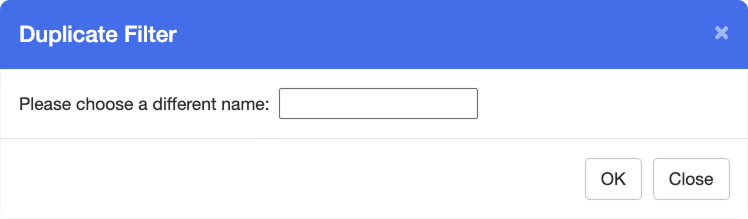
Enter a name for the new filter in the text box, then click OK. The new filter appears on the Top-Level Domain Filter page.
Note
The duplicate is an exact copy of the original, including the state of every top-level domain. The original Top-Level Domain Filter is not removed upon duplicating.
Warning
Deleting a Top-Level Domain Filter is a permanent action. Deleted filters cannot be recovered.
On the Top-Level Domain Filter page, locate the filter to delete and click the
 button to the right of it.
Click OK in the confirmation window. The Top-Level Domain Filter is permanently removed from the list.